
There is a courtroom inside your head. It is in session right now, whether you have called it to order or not. And if the loudest voice in that room is the dread before you stand to speak, know this: hypnosis for performance anxiety is one of the calmest, most practical tools available to you. This is where hypnosis and life coaching for anxiety and stress quietly earn their reputation.
If you are only beginning to recognise these patterns, start with our guide to what high-functioning anxiety looks like in lawyers.
The prosecutor is that voice that reminds you, at 2 a.m., about the objection you should have made three years ago. The defence attorney is the part of you that keeps insisting you are doing just fine, thank you, no need to examine the sleepless nights or the third cup of coffee before the sun is up. And the judge, …well, the judge is usually out for lunch, leaving the two of them to argue in circles until your alarm clock breaks up the party.
I want to talk to you about hypnosis. Not the boardwalk kind, not the man in the sequined vest making a schoolteacher cluck like a chicken for the amusement of tourists. I mean the real thing; the tool, the craft, the quiet science that might just be the best kept secret in a profession built on the power of persuasion.
Because here is the funny part, counsellor. You have been practicing hypnosis your entire career. You just called it the "closing arguments."
THE PERSUASION YOU ALREADY PRACTICE
Think about the last time you had an entire room hanging on your every word, let’s say a jury. You lowered your voice. You slowed down. You painted a picture so vivid they could smell the tire smoke and hear the brakes that never came. You led twelve strangers, one careful sentence at a time, from doubt to certainty.
That is textbook hypnosis. The art of guiding a mind, gently, toward a conclusion it comes to believe was its own idea all along. Hypnosis is simply the formal name for what the best of us have been doing on our feet.
So the real question is not whether hypnosis works. You have made a career out of proving it does.
The question is: why have you never once turned that power on yourself?
THE CLIENT WHO DOES NOT PAY
Every lawyer has that one impossible client. The one who would not listen. The one who ignores good advice, who sabotages the case, who shows up to the hearing or a negotiation having done exactly the opposite of what you advised.
For most of us, that client is our own subconscious.
Consider the evidence. You know you should sleep before the big trial. You lie awake rehearsing. You know the anxiety before oral argument is irrational. It shows up anyway, relentless as a filing deadline. You know you cannot control the verdict, only the effort, yet you carry every loss like a stone in your briefcase for a decade.
Your conscious mind is a brilliant. It builds airtight arguments for why you should be calm, focused and confident. And then your subconscious, that unpaying client in the back of the room, quietly sabotages every one of them.
Here is the thing about the subconscious: it does not respond to arguments. But it respond to suggestion. You have to reach the mind the way the mind actually works: through images, through calm repetition, through a state of focused relaxation. It's the same reason hypnosis for social anxiety reaches people that pure willpower never could.
That state has a name. It's hypnosis.
DETHRONING THE HOLLYWOOD MYTH
What hypnosis is not?
Let's dispense with the myths, the way you would dispense with a witness who clearly was not there.
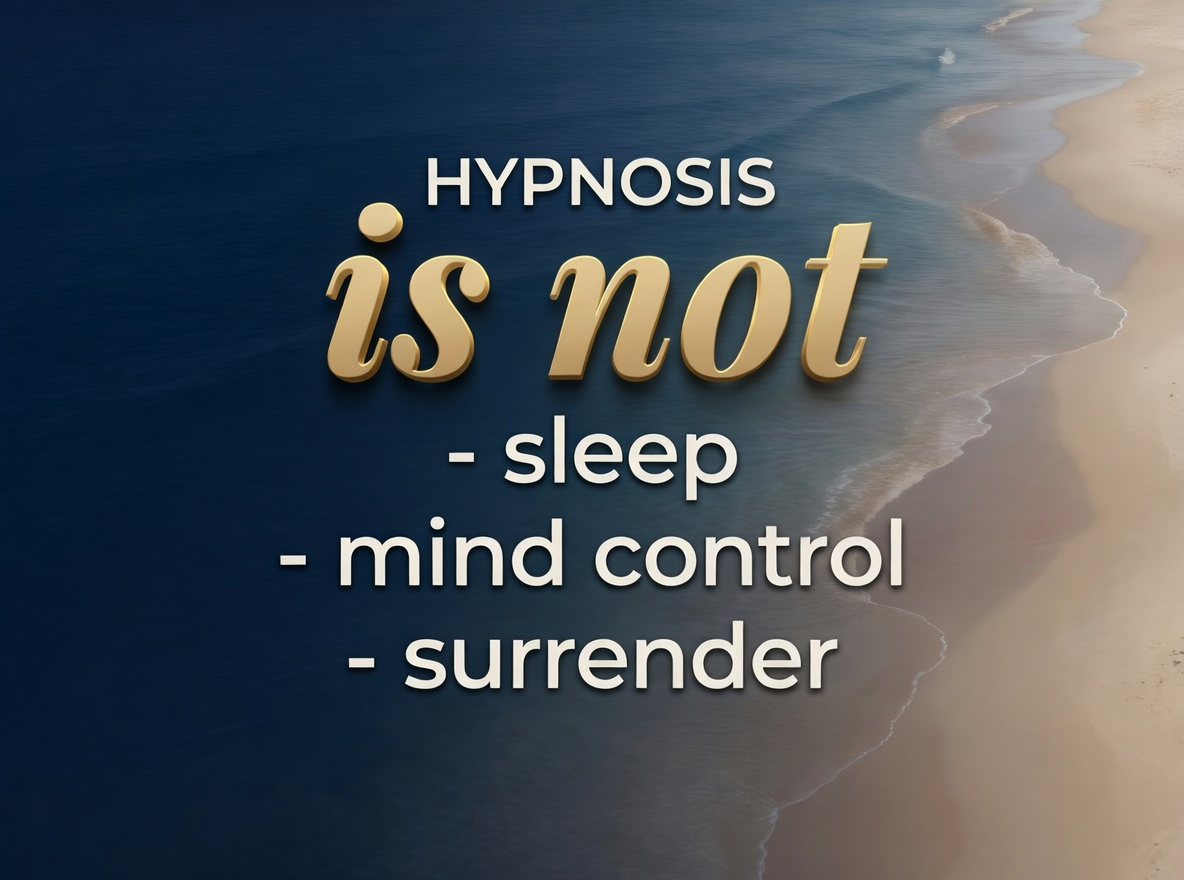
Hypnosis is not sleep. In fact, it is nearer to the sharp end of wakefulness—a lens narrowing light to a single point rather than a curtain drawn across the window.
Hypnosis is not mind control. Suggestion does not override your values or steer you against your genuine will; it can only travel a road you have already agreed to open.
Hypnosis is not surrender. It is the reverse. You are not handing over the keys, you are taking your seat as author of the story, speaking directly, without your inner critic scrawling objections in the margins.
What hypnosis is?
At its heart, hypnosis is a state of relaxed, focused attention where the usual gatekeeper i.e. your busy, sceptical, cross-examining conscious mind, steps aside long enough for you to plant a new idea in fertile soil.
You already enter this state several times a day. Ever driven home and realised you do not remember the last three exits? Hypnosis. Ever gotten so absorbed in drafting a document that you looked up and two hours had vanished? Hypnosis. It is not exotic. It is Tuesday afternoon. The only difference is that a trained practitioner does on purpose what the highway does to you by accident.
THE CASE FOR THE DEFENSE (OF YOUR SANITY)
The law is not merely a demanding profession. It is a devouring one. The data on lawyer stress, anxiety and burnout reads like a personal injury complaint against the entire industry. And the traditional advice, just relax, take a vacation, try yoga, tends to bounce off the analytical mind like a poorly worded motion.
This is exactly why so many high performers eventually explore hypnosis for anxiety in the first place. Hypnosis works differently. Here's where it has earned its keep:
-
Performance anxiety. That electric dread before oral argument can be retrained, not white-knuckled through, but genuinely dialled down https://calgaryhypnosiscenter.com/research/.
-
Public speaking anxiety. If you've ever wondered does hypnosis work for public speaking anxiety, the evidence (https://chpa.ie/hypnotherapy-research/) suggests it can. Working with a public speaking anxiety coach who uses hypnotic technique can turn that dread before oral argument into focused energy.
-
Focus and recall. The same techniques that help you enter deep concentration can sharpen the retrieval of facts, dates, and case citations when the pressure is highest.
-
Sleep. The insomnia that trails litigators like a process server can be remarkably responsive to hypnotic suggestion. Sleep hypnosis for stress and anxiety has been found to be effective to teach the mind that would not stop arguing to finally rest its case in numerous research papers https://pmc.ncbi.nlm.nih.gov/articles/PMC5786848/. Many lawyers keep a recording of sleep hypnosis for anxiety and stress on the nightstand for exactly those verdict-eve nights.
-
Resilience. Not every case goes your way. Hypnosis can help you file the losses where they belong - in the archive, not in your chest.
Hypnosis is a powerful catalyst and it sits inside a wider structure. You can see exactly how in my coaching framework for high-functioning anxiety, which shows the phases, tools and outcomes step by step.
If you have reached the point where you are searching hypnosis for anxiety near me, that instinct to act is worth honouring. A confidential first conversation is the simplest next step.
You can book a confidential discovery call whenever you are ready.
Book a confidential discovery call — 30 minutes, private, no obligation.
Book a Confidential Discovery Call
This content is educational, not therapy, counselling, or medical advice. Coaching does not diagnose, treat or prescribe for mental health conditions. If you are in crisis or experiencing a mental health emergency, please contact your doctor or local emergency services immediately.